Ortholinear, row stagger and column stagger
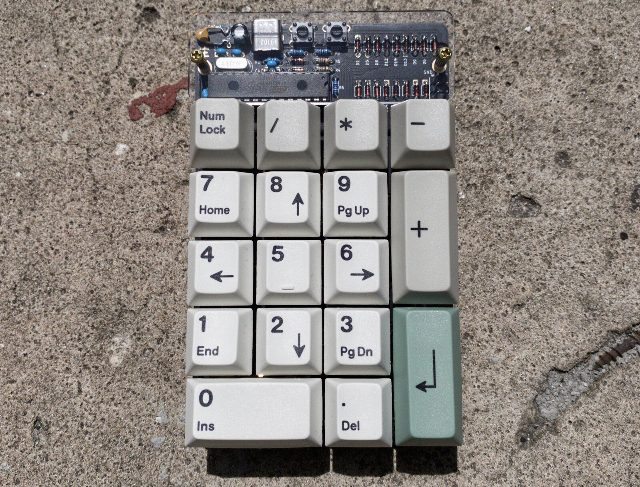
Stagger is how a keyboard's keys are shifted against their neighbors. An ordinary keyboard shifts each row sideways, which is row stagger. Many ergonomic boards shift the columns up and down instead, which is column stagger. An ortholinear board shifts nothing and its keys sit in a grid.
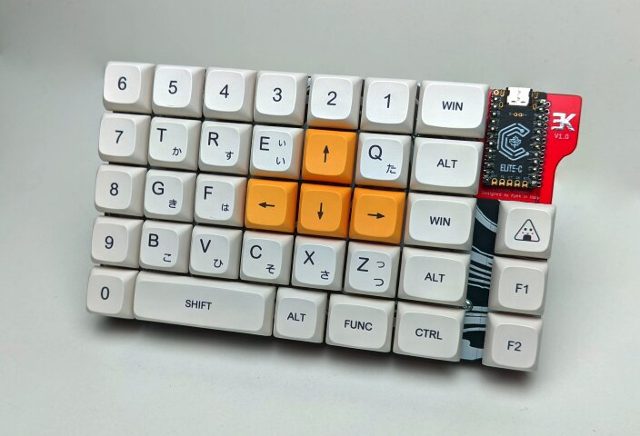
Almost every laptop and desktop keyboard is row-staggered. On a US layout the A row starts a quarter key right of Q, and Z another half key on, so a finger moves at a slant going up and down.
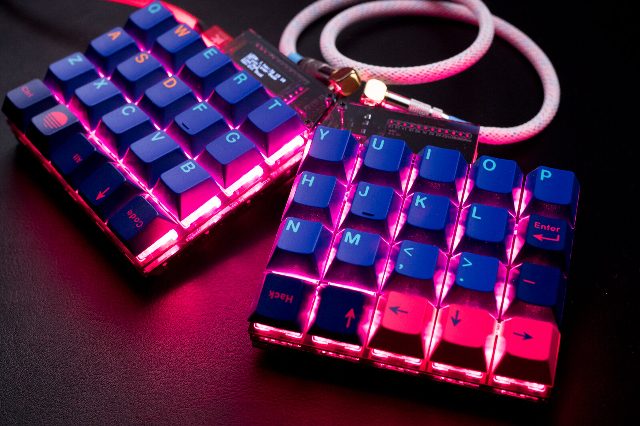
Column stagger keeps the columns straight and moves them up or down to match your finger lengths. On the Corne the middle-finger column is highest and the pinky column sits 0.3 of a key lower.
Stagger isn't splay. Splay turns the columns so they fan out. A board can have either, both or neither, and design pages show them on separate lines.
Here 128 are column-staggered, 35 are row-staggered and 63 are ortholinear, read from where each PCB file puts its switches, with a few sculpted boards judged by eye. Not recorded yet for 112 of the 338 designs, where there's no board file, the board's key count matches none of its published layouts, it has fewer than six keys, or its files disagree. One gamepad-shaped board fits none of the three.
Column-staggered designs 128
-
 ★ 7.7k
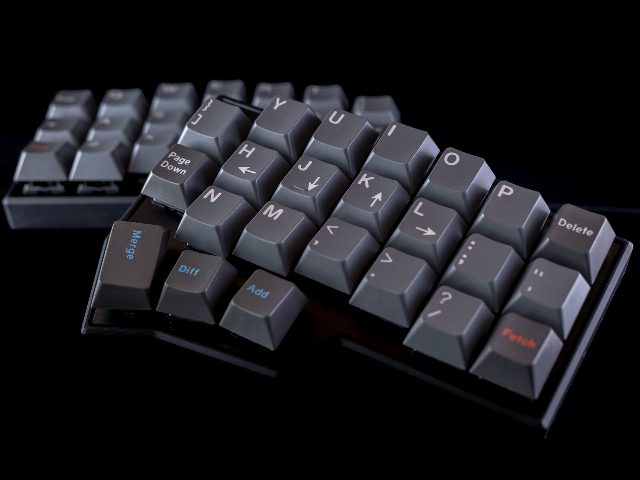
Corne Cherry v4
by foostan
42 / 36 keyssplit
★ 7.7k
Corne Cherry v4
by foostan
42 / 36 keyssplit
-
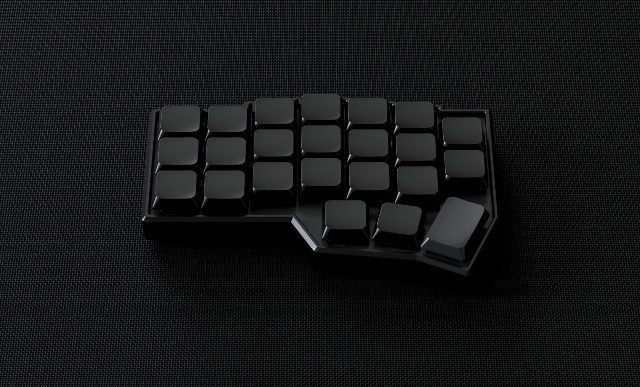 ★ 7.7k
Corne Chocolate v4
by foostan
42 / 36 keyssplit
★ 7.7k
Corne Chocolate v4
by foostan
42 / 36 keyssplit
-
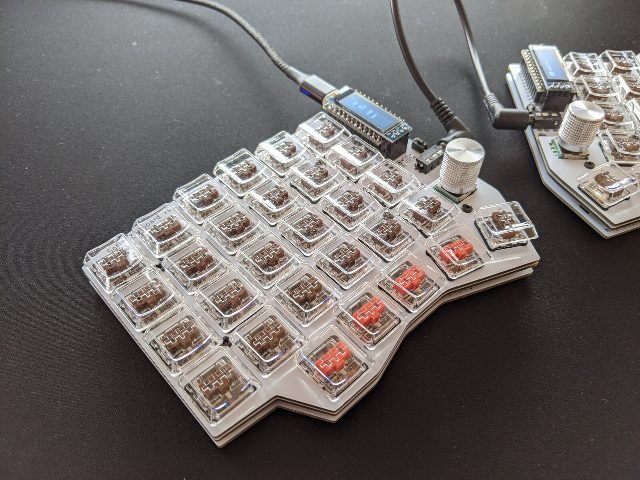 ★ 2.5k
Sofle Choc
by josefadamcik
58 keyssplit
★ 2.5k
Sofle Choc
by josefadamcik
58 keyssplit
Row-staggered designs 35
-
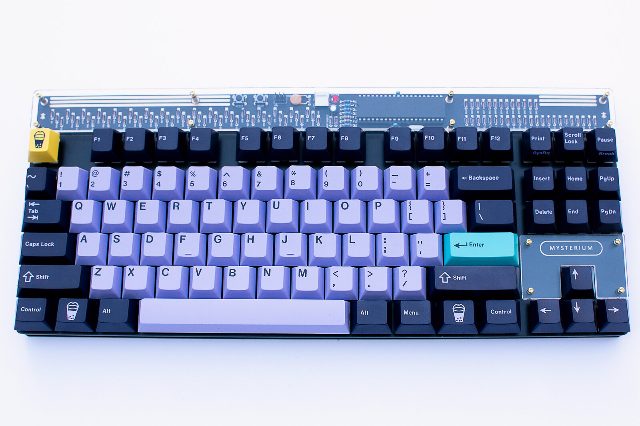 ★ 543
mysterium
by coseyfannitutti
88 / 87 / 86 keysunibody
★ 543
mysterium
by coseyfannitutti
88 / 87 / 86 keysunibody
-
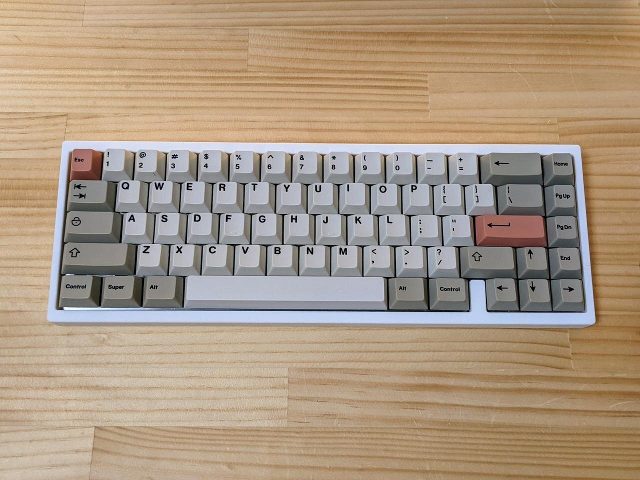 ★ 311
bakeneko 65
by kkatano
68 keysunibody
★ 311
bakeneko 65
by kkatano
68 keysunibody
-
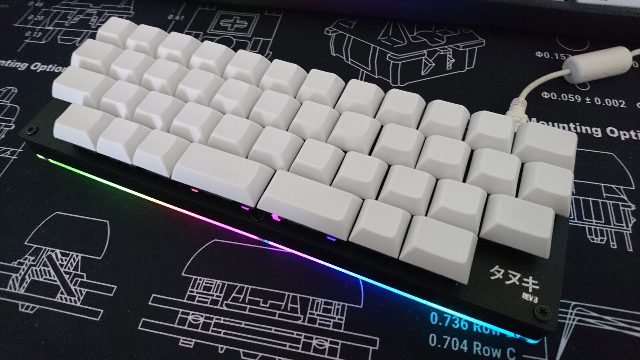 ★ 284
tanuki pcb3
by SethSenpai
42 keysunibody
★ 284
tanuki pcb3
by SethSenpai
42 keysunibody